
Team news
BRT Mid-Year 2026 Newsletter Is Out
The BioResources and Technology (BRT) Division Mid-Year 2026 Newsletter, is out - bringing together the research, projects, achievements, and people that shaped the first half of the year.
The latest edition reflects another active period for BRT, marked by continued scientific progress, international collaboration, and the practical application of research. Readers can explore developments across the division’s core areas, including biogas, circular bioeconomy, sustainability, resource management, open science, and climate resilience.
Alongside these research highlights, the newsletter features key project milestones, team achievements, new colleagues, internship activities, and opportunities ahead, including MCYR 2026.
Together, these stories capture the people, partnerships, and shared ambitions continuing to drive BRT forward throughout 2026.
MWAZACO Field Insights: The Ecological Effects of Mining in the Copperbelt
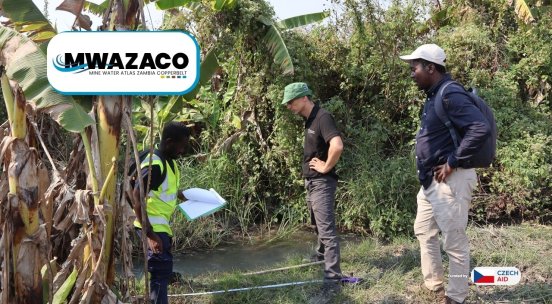
The Mine Water Atlas of the Zambian Copperbelt (MWAZACO) project is a collaborative initiative focused on safeguarding drinking and irrigation water resources across Zambia’s Copperbelt Province. The project is implemented by Future Resources Development z.s. (FRDA) in partnership with the Czech University of Life Sciences Prague (CZU), OPV s.r.o., HYDRO-PUR s.r.o., and key Zambian stakeholders, including the Mines Safety Department (MSD) and Copperbelt University (CBU).
MWAZACO aims to address one of the region’s most pressing environmental challenges: the contamination and management of water resources affected by intensive mining and metallurgical activities. Through research, monitoring, and collaboration with local partners, the project contributes to a better understanding of the environmental impacts associated with mining across the Copperbelt.
Last month, BRT PhD student Antoine Bercy and researcher Dr. Chama Theodore Ketuama travelled to Zambia representing CZU as part of the MWAZACO project. During the visit, they took part in project activities on the ground.
Read Antoine’s firsthand account of their experience below!
New Paper Published! Effect of Nanoparticles Addition on the Anaerobic Digestion Process: A Review
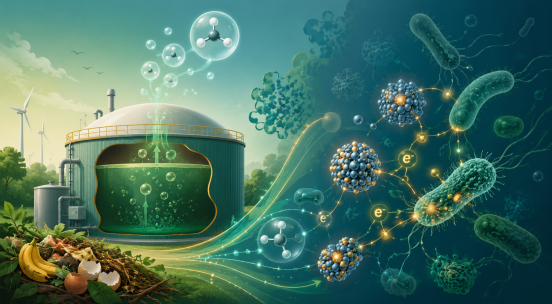
BRT-affiliated researcher Prof. Hassan El Bari recently co-authored a review article published in Waste and Biomass Valorization. The paper examines how nanoparticles can be incorporated into anaerobic digestion systems to improve process efficiency, biogas production, and overall stability.
Anaerobic digestion is a biological process that breaks down organic matter in the absence of oxygen, producing biogas rich in methane. Although widely used for organic waste treatment and renewable energy production, its efficiency can be limited by slow hydrolysis, microbial inhibition, and process instability. The review explores nanoparticles as a potential strategy for addressing some of these limitations.
The authors examine several groups of nanoparticles, including metallic nanoparticles such as iron, nickel, and silver, metal oxides, and carbon-based nanomaterials. Across the studies reviewed, nanoparticles were found to influence anaerobic digestion through several mechanisms, including stimulating microbial activity, improving enzymatic activity, and facilitating electron transfer between microorganisms involved in the digestion process.
Importantly, the effectiveness of nanoparticle addition depends strongly on factors such as the type of material used, particle size, concentration, and dosing strategy. The review shows that these factors can affect both overall biogas production and methane yield. In some cases, nanoparticles can also shorten the time required for biogas production or improve the stability of the digestion process. However, higher concentrations do not necessarily result in better performance and can instead inhibit microbial activity.
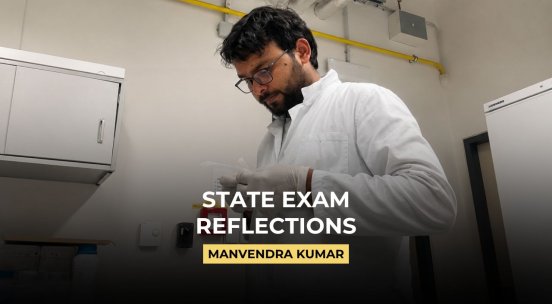
My State Exam Experience - Manvendra Kumar
The state exam is a key milestone in the PhD journey, testing both subject knowledge and the ability to synthesize and apply research concepts. In this blog series, BRT PhD students provide an inside look at the exam process — from preparation methods to the structure of the exam itself — offering insights into this essential academic requirement. Read PhD student Manvendra Kumar's first account below!
Passing my state exam was honestly a big relief for me and also a very important milestone in my PhD journey. Before entering the exam room, I was quite stressed and nervous because you never know exactly what kind of questions will come. But once I sat in front of the examiners and the discussion started, I slowly became more comfortable and confident.
My state exam covered three subjects: Organic Waste Management, Renewable Sources of Energy in Tropics and Subtropics, and Environmental Engineering in Tropics and Subtropics. All three were connected in some way with my PhD research, which focuses on improving anaerobic digestion of different organic wastes for better biogas production and sustainable waste management.
New Paper Published! Multi-sensor integration and cloud-native AI for climate-smart agricultural monitoring: A systems framework
BRT members Postdoctoral Researcher Dr. Bojana Petrovic, Director Hynek Roubík, Senior Researcher and Advisor Dr. Jan Banout and Project Manager Dr. Jan Staš from the Faculty of Tropical Agrisciences (FTZ) at the Czech University of Life Sciences Prague (CZU) recently published an article in Computers and Electronics in Agriculture.
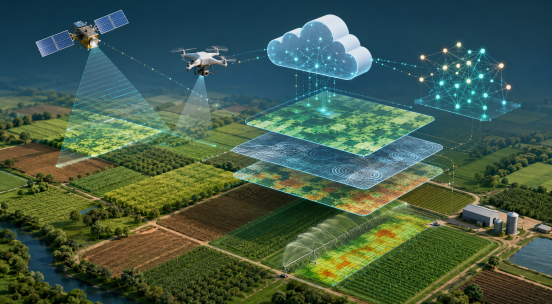
How can satellite observations, machine learning and cloud computing be combined to help agriculture respond to climate change? A new review led by BRT researcher Bojana Petrovic brings these technologies together in a unified framework for practical agricultural monitoring and decision support.
This open-access article reviews developments in remote sensing for climate-smart agriculture between 2000 and 2025. Drawing on 120 core peer-reviewed studies, the authors propose a five-layer computational framework, illustrated below, that connects data acquisition, cloud processing, machine-learning analytics, data fusion and decision-support outputs.
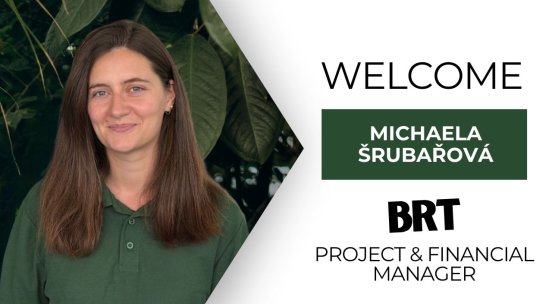
Introducing BRT’s New Project & Financial Manager - Michaela Šrubařová
Recently, the BRT welcomed new project & financial manager Michaela Šrubařová. Read her firsthand account detailing her background and aspirations below!
My name is Michaela Šrubařová, and I am excited to join the BRT project team as its newest member. I hold a Master's degree in International Territorial Studies from Mendel University in Brno and am currently pursuing a Master's degree in Agroecology at the University of South Bohemia in České Budějovice. Before joining the Faculty of Tropical AgriSciences (FTA) at the Czech University of Life Sciences Prague (CZU), I worked in the NGO sector, where I managed international development and humanitarian projects.
My journey to FTA at CZU has been quite a long one. During my studies at Mendel University, I gradually realized that well-functioning agriculture is one of the fundamental pillars of social and economic development. Agriculture is a key sector in every country and has enormous potential to drive sustainable growth. However, this is only possible if farmers and local communities have access to knowledge, innovations, and practical solutions to the challenges they face.